
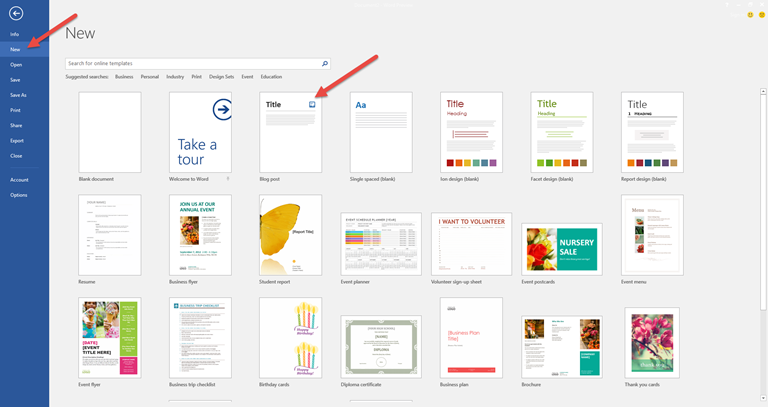
I just downloaded and installed Office 2016 Preview from our Office 365 tenant — nothing new with how you download and install 2016, but I still remember the days of getting Office media on CDs, so I always appreciate how easy it is now with O365 – and I like it. One of the things I noticed I haven’t used before was posting a blog post directly from Word. I don’t use this feature (though it has existed for many years in Word), so I thought I would give it a whirl. Unsurprisingly, this post was written in Word 2016 … Read More
A Kickin’ [Interactive] Map

Mountaineer United Soccer Club (MUSC) came to us with a problem. Not a cloud (SaaS, PaaS, IaaS), big data, Oracle, or enterprise application problem; a different kind of problem. The field maps they had showing off their various soccer fields were very rudimentary with some not-to-scale representations of the play spaces. They lacked visual appeal that people desire when it comes to maps. They asked us to update the maps so so they had a bit more visual interest, so we took on the challenge and did a bit of research. We had some good design ideas for the map.
Before M&S: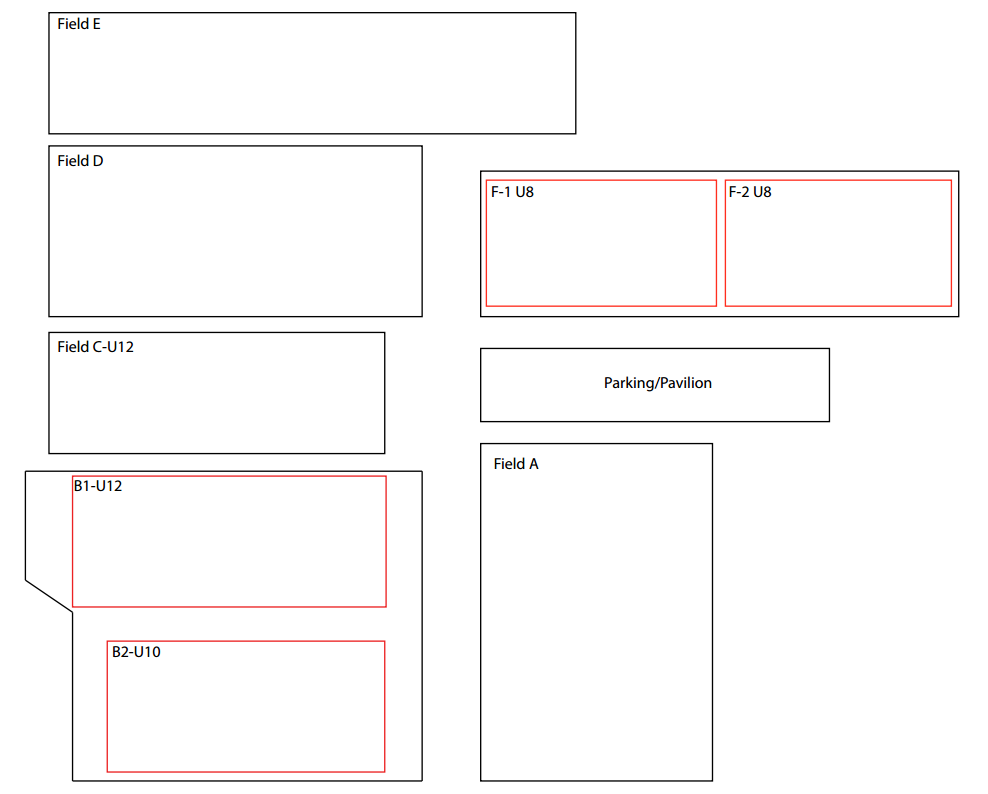
|
After M&S: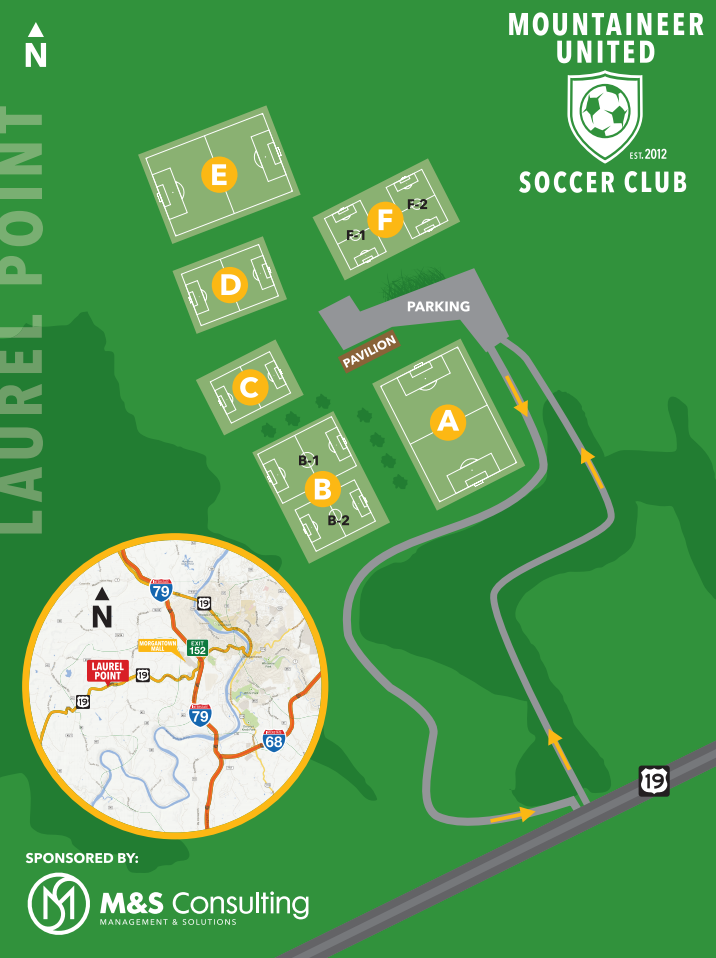
|
[message_box title=”Interactive Map” color=”green”]CLICK HERE for the interactive map.[/message_box]
Top 10 excuses why ADF has a slow(er than Oracle and organizations desire) uptake
So many of these are related, that I decided to simply list them in no specific order: “The technology changes/improves too rapidly, and I have fears of 1) ‘will what I am doing become old-school soon’ and 2) ‘is a new/better way of doing going to be released within a few months’.” “The documentation is daunting.” “The suggested pre-requisites and structured learning programs seem to change every few months.” “I have spent considerable time and money hiring smart coders that don’t take to 4GL development as readily.” “Code generating technologies have some negative connotations when it comes to code cleanliness, … Read More
Bigmon Cloud Monitoring Saved My Site
Over the years, the M&S Consulting site has grown quite a bit. We have hundreds of blog articles and have retired more pages of content than are currently active. By introducing Bigmon Cloud into our environment, we realized — to our surprise — that our site was one of the slower loading sites when compared to other sites we have built, either for internal project or customers. By using Bigmon metrics reporting and trending, we were able to test mechanisms for speeding up the site and moving performance into a place we felt was acceptable. Then, we were able to … Read More
IE6 is [almost] dead – Usage is 2.4% in USA, 34.6% in China
It’s not just web 2.0 developers making the push away from IE6 anymore. Microsoft is publishing the stats, and even they want people off of Internet Explorer 6 (IE6). Join the cause by pasting your own “STOP using this out-of-date browser” banner (provided by Microsoft): <!– [if lt IE 7]> <div style=’ clear: both; height: 59px; padding:0 0 0 15px; position: relative;’> <a href="http://windows.microsoft.com/en-US/internet-explorer/products/ie/home?ocid=ie6_countdown_bannercode" alt=""><img src="http://www.theie6countdown.com/images/banners/warning_bar_0000_us.jpg" border="0" height="42" width="820" alt="You are using an outdated browser. For a faster, safer browsing experience, upgrade for free today." /></a></div> <![endif]–><!– [if lt … Read More
ASP.NET HyperLink in GridView using HyperLinkField, SqlDataSource, BoundField, TemplateField, and HyperLink
I am amazed how difficult it was to find simple examples of exposing a hyperlink in an asp.net gridview control. I tried some obvious things that didn’t work at first, but I got four different approaches working that I thought I would share for others that run into this [I would assume] common need. In my case, I wanted to hyperlink to an external site based, passing in the external url along with an ID passed in as a URL parameter. For example: http://www.externalsite.com?myID=1234 Construct URL Inside SQL This is old code that had the SQL query inside a SqlDataSource … Read More
Identity Management: From Oracle 10g to 11g – IdM, SSO, OAM
I have been running Oracle Identity Management 10g with heavy use of 10g SSO capabilities. Much of our web security architecture along with application authentication relies on this infrastructure. What do I do as development begins to shift from OracleAS to WebLogic, and our middleware stack goes from 10g to 11g? We will need to run 10g and 11g in production side-by-side for some period of time. This is a question many of our customers are asking and it is understandable that there is confusion around this. Oracle hasn’t provided the clearest of answers, and in general, identity management initiatives … Read More
Best CMS: WordPress vs Joomla vs Drupal – What makes one a winner over the others?
I was recently asked [again] about what platform to choose for an open source web CMS. At the highest level, and to avoid considering too many variables that introduce confusion into a decision, my general feeling on this is to go with the technology that best balances the following (in order): Community (users, third parties, and developers): size, enthusiasm, and proselytization Technology: tech stack and solution architecture Leaders: commitment, flexibility, release schedule I feel the community size and enthusiasm is so important that I decided to chart out the general trends. Although we implement will all of these CMS’s successfully, … Read More