
I have been running Oracle Identity Management 10g with heavy use of 10g SSO capabilities. Much of our web security architecture along with application authentication relies on this infrastructure. What do I do as development begins to shift from OracleAS to WebLogic, and our middleware stack goes from 10g to 11g? We will need to run 10g and 11g in production side-by-side for some period of time. This is a question many of our customers are asking and it is understandable that there is confusion around this. Oracle hasn’t provided the clearest of answers, and in general, identity management initiatives … Read More
Oracle Application Server Version – Verify 10g Upgrade to OracleAS 10.2.3 for Portal 10.1.4.2
There are a couple of different ways you can verify you are running Oracle Application Server 10.1.2.3. Perhaps the simplest is to navigate to the EM Consile about page typically found at: http://[domain]:18101/emd/console/aboutApplication Another option is to use oPatch by running the following command: [ORACLE_HOME]/opatch/opatch lsinventory -detail Then, navigate to [ORACLE_HOME]/.patch_storage and look for the latest log file. You will have a full listing of products installed in your ORACLE_HOME. If you have just upgraded Oracle Portal to 10.1.4.2 and want to verify its version as well, you can simply navigate to Portal Administer tab > Global Settings.
6 Tips to Prioritize People in a Collaboration Portal (WebCenter)
When people interact with executable processes, collaboration portals need to be built to accomodate their roles and working style. The list below shows guidelines to focus a collaboration portal around usability, relavance, and personalization, while giving mechanisms for the user to understand the bigger picture, deploy collaboration tools, and prevent overloaded work queues.
Strategy to Create a Usable Multi-function Task List (ADF)
When People Interact with Executable Processes, a key business enabler is the user tools. Not all tasks or activities demand the same type of user interaction. This article describes how to identify different types of tasks to create a a Usable Multi-function Task List
Oracle Portal Broken with iPhone
SSL with Oracle Application Server WebCache and iPhone The latest iPhone update appears to have broken some SSL-enabled OracleAS sites. We have been working through finding a solution for an Oracle Portal customer of ours and it has been fairly hairy. On at least one of the environments, we have found a solution. We can likely help if you have been having an issue with your SSL handshakes.
Oracle Portal Server Dynamic Menu
As part of the M&S Dynamic Oracle Portal utility, the Oracle Portal Dynamic Menu allows you to generate hierarchical links available to the visitor navigating your portal, styled exactly the way you want.
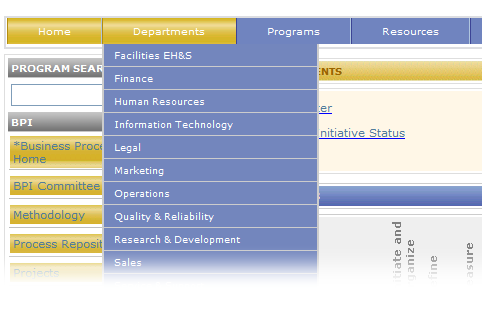
For a limited time, contact us with how you would use this solution and we will provide a single domain license of the Oracle Portal Dynamic Menu free of charge to your organization, which must have a valid Oracle Portal license.
Oracle Portal HTML Templates (Page Skins and Content Layouts) – Cache
If you use HTML Templates (Page Skins and/or Content Layouts) on your Oracle Portal implementations, you might notice that they are cached often. If you want the results/rendering to change more often for these components, you might want to disable the page cache or tweak the webcache settings appropriately.
Oracle Portal 10.1.4 or 10.1.4.1 Upgrade to 10.1.4.2 – Features and Bug Fixes
You may have applied or are considering applying the Oracle Application Server 10.1.2.3 patch for a variety of reasons. As a result, if you are running Oracle Portal 10.1.4 or 10.1.4.1, your Portal will be upgraded to 10.1.4.2.
Portal 10.1.4.2 New Features
There isn’t much to be found in terms of documented new features for Portal 10.1.4.2, but I understand the following to be new to this release:
- Portal Repository JSR-170 adapter
- You can now copy pages across page groups
- New HTML DOCTYPE specification
Portal 10.1.4.2 Bug Fixes
Of the many bug fixes documented for Oracle AS 10.1.2.3 and Portal 10.1.4.2, following are just a few that you might be pleased about:
- Omniportlet onclick was still opening the link in the same browser window.
- Customize/Personalize links on a portlet were accessible even after the Global Inactivity Timeout has occurred.
- When a WSRP portlet tried to upload content of size > 64k as multipart request, then an error was displayed saying > 64K is being uploaded.
- All old-style URLs may now be redirected directly to the new URL without going via the splash screen.
- More in the full article…